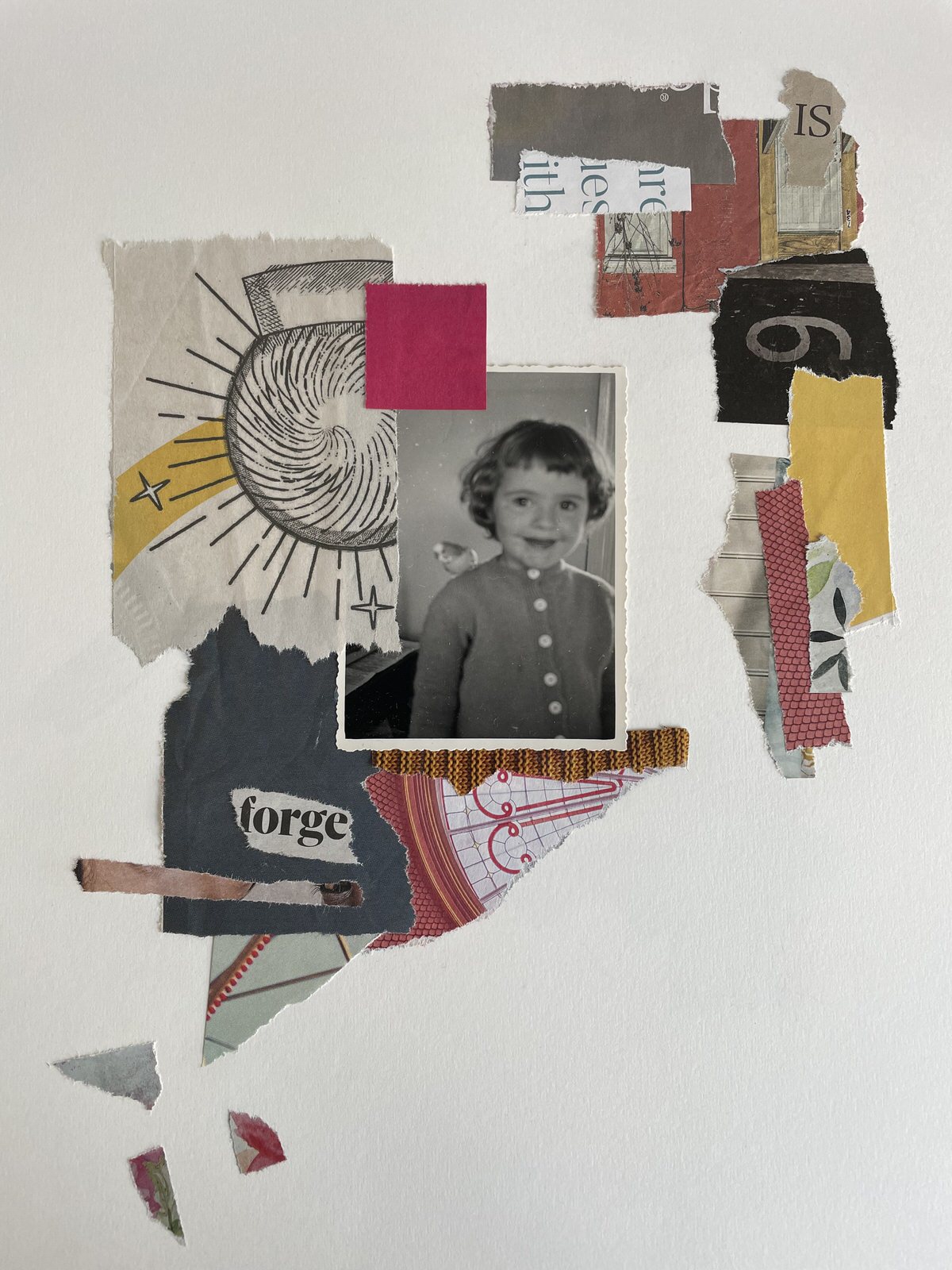

“I suck and I love to fail” is a mantra improv actors use to free themselves of the pressure to be perfect, and create mental space to make bold choices and take creative risks.
Creative experimentation inevitably leads to making bad work sometimes (a lot of the time, actually). And that’s ok. It’s only by trying - and failing - that you can (sometimes) get to the good stuff on the other side.
It can be scary to fail, especially when we only see other people’s highlight reel of successes online, and there's societal expectation of perfection at all times. As a result we often doubt our own greatness, and dismiss good work and good ideas as not good enough, important enough, interesting enough (I see/hear it all the time when mentoring).
***
In a 2018 study, psychologists Thomas Curran and Andrew Hill identified three dimensions of perfectionism: self-oriented, other-oriented and socially prescribed.
Self-oriented perfectionism is the tendency to hold oneself to an unrealistically high standard, while other-oriented perfectionism means having unrealistic expectations of others.
But "socially prescribed" perfectionism is the most debilitating of all. It describes the feeling of persistent anxiety stemming from a sensation that everyone is waiting for you to make a mistake so they can write you off forever.
This anxiety is not unfounded, and it's overwhelming - whether we are talking about having the “correct” political opinion within your peer group, making the “right” life choices, or simply creating something in public (be it photography, writing or running a business).
***
I don't know about you, but I definitely struggle with perfectionism. It can get quite debilitating at times, and stops me from speaking my mind, sharing work or even getting started on a project because I decided in advance it won’t be perfect so there’s no point in trying (it sounds silly, really, when you write about it like this).
If you too struggle with perfectionism you might be relieved to know it’s not you, it’s - quite literally - them.
I first got introduced to this idea in Saira Rao and Regina Jackson’s book White Women (recommended reading to all my pale-skinned friends) in the context of the overwhelming refusal of so many of us to speak out against injustice, where they write: "You're expected to be perfect. To be perfect, you are required to be nice. To be nice, you must stay silent."
Tema Okun in her essay "White Supremacy Culture – Still Here" expands on this idea:
"Perfectionism is the conditioned belief and attitude that we can be perfect based on a standard or set of rules that we did not create and that we are led to believe will prove our value. White supremacy culture uses perfectionism to preserve power and the status quo. As long as we are striving to be perfect according to someone else's rules, we have less energy and attention to question those rules and to remember what is truly important."
***
So what’s the answer then? How can we condition ourselves away from perfectionism and the harms that it does - to our souls, our creativity and even our society?
The first step - I guess, I’m still figuring it out - is to see perfectionism for what it is – a harmful idea of holding ourselves to an unattainable “standard” that is deeply rooted in capitalism, ableism, sexism and other systems of oppression. Even if we hold a level of privilege within those systems (and especially then).
The second step is to practice imperfection ourselves, and welcome imperfection in others. It’s to know what we will all f**k up, and that striving for excellence is some aspects of our work is not necessarily the same as striving for perfection.
This may look like creating bad work on purpose (I read somewhere that we need crap to fertilise the good stuff and it really stuck with me, especially given my recent adventures in gardening).
This may look like sharing work-in-progress before you’re fully ready and figuring it out as you go. Or it might look like saying "I don't know" even when you're supposed to be an "expert" on something (or a parent! I say "I don't know" all the time to my kid - and then we look it up together).
This may look like being a beginner again and learning a new skill. There’s less expectation on yourself when you’re a beginner, and it’s easier to accept that what you make isn’t going to be particularly good, thus increasing you tolerance for imperfection.
If you'd like to practice imperfection, you can do that together with me in a bunch of different places.
Try out Creative Anarchy, a free space for creative people alongside our monthly peer-to-peer crits. Or you might want to work with me one-on-one, or in one of my online workshops, like Exercises in Words + Pictures.